What Is Ecommerce Website Maintenance?
Ecommerce website maintenance is the ongoing process of keeping an ecommerce platform secure, updated, and running smoothly. Common examples of ecommerce platforms are Shopify, Woocommerce, Squarespace, and OpenCart. These platforms all have backend interfaces for shop owners to customize and manage themselves.
More specifically, maintenance is what happens regularly after your initial website build is complete. It covers everything from routine technical updates, to broader content changes to make your website more user-friendly.
Why Ecommerce Maintenance Matters
Unlike a standard business website, an ecommerce store is working around the clock. Customers are browsing products, creating accounts, submitting personal information, and making purchases at all hours of the day. While platforms like Shopify offer support resources, dedicated support for your website adds another layer of protection.
Ongoing technical support helps keep your store available, secure, and performing the way customers expect. When maintenance is neglected, even small issues can lead to lost sales, declining search visibility, frustrated customers, and a loss of trust in your business.
Ecommerce maintenance covers much more than fixing something when it breaks. Plugin and software updates, security monitoring, performance optimization, content updates, backups, and improvements to the user experience all play a role in keeping your online store healthy.
Without consistent maintenance, you’re putting your website’s security, performance, customer experience, and ultimately its ability to generate revenue at risk.
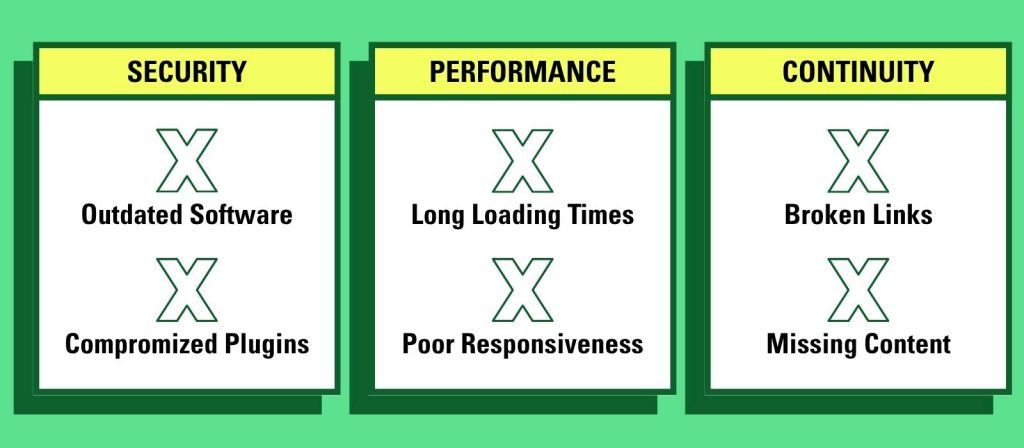
1. Security Risks
For self-hosted ecommerce stores rather than a fully hosted platform, security requires ongoing attention. Outdated software, plugins, themes, and integrations can create vulnerabilities that attackers actively look for and exploit.
You wouldn’t leave your cash register unlocked, so why leave your online storefront exposed? Payment processing and payment gateways deserve particular attention because they are responsible for handling sensitive transactions. Regular ecommerce website maintenance helps close security gaps before they become larger problems.
2. Performance Impact
Every second matters when someone is trying to make a purchase. Slow-loading product pages and a sluggish checkout process create friction between a customer and a completed order. If that friction becomes too great, customers may simply leave.
Ongoing performance monitoring can identify issues before they begin costing you sales. This includes watching page load times, mobile performance, server response, image optimization, and other factors that affect your store.
Performance also matters beyond the customer experience. Page speed and responsiveness can influence search visibility. Meaning a poorly performing website often has a harder time competing for valuable search traffic.
3. Business Continuity
Your ecommerce website shouldn’t remain static while your business changes around it. Products change, promotions end, policies evolve, teams add integrations, and customer expectations shift over time. If you don’t give your website regular attention, it will drift out of sync with your business.
Broken links, outdated information, confusing navigation, discontinued products, and neglected functionality can all make your store less effective and create unnecessary obstacles for customers.
Consistent ecommerce maintenance keeps your store aligned with your current business goals. It also ensures customers can continue to browse, shop, and purchase without unnecessary interruptions.
What Do Ecommerce Website Maintenance Services Include?
Ecommerce website maintenance services can vary significantly from one provider to another. Some focus primarily on routine technical tasks, while others offer more comprehensive support and ongoing improvements. While every maintenance plan is different, we recommend looking for services that cover these key areas:
Content & Product Updates
Keeping your ecommerce website current is important for both the customer experience and conversions. This includes adding new products, updating descriptions and prices, and publishing new promotions. Optimizing product images can also improve load times while keeping your store looking polished and professional.
Security & Updates
Monthly plugin and software updates help fix security risks and keep your website protected. Ongoing website security should also include malware scans, firewall monitoring, and SSL certificate management.
If these tasks take too much time or are difficult to manage, purchasing a website maintenance plan can help. Allowing a team of experts to handle these updates and security measures for you. Protecting your store and customer transactions.
Technical Support
Technical support covers bug fixes, broken links, and other problems that keep your website from working as it should. It can also include support for your CMS, ecommerce platform, and other tools your store relies on.
Instead of spending hours troubleshooting issues, you can turn to a web expert for help. The proper ongoing support will reduce downtime, prevent checkout problems, and help you avoid lost sales.
Ecommerce Website Maintenance Packages: What to Look For
Cost: Agencies often have multiple tiers. Simple, more security-focused tiers are typically around $50-200 per month. Premium, more design-focused tiers can range from hundreds to thousands per month.
Flat-Rate or Hourly Billing: Depending on the quantity of work you can gauge whether you need a per-hour or per-month agency. Review website maintenance plans in detail and compare the hours offered as well as the time commitments.
Capabilities: Look beyond basic updates and security when comparing packages. Useful capabilities include product and content updates, design changes, checkout troubleshooting, speed optimization, mobile improvements, analytics support, and user experience updates. The right mix gives you support for both maintaining your store and improving it over time.
Personal Support: Don’t settle for a cheap, anonymous support subscription. Look for a support expert who gets to know your website, understands your industry, and is available when you need help.
Understanding Ecommerce Website Maintenance Costs: What Should You Expect to Pay?
What you should expect to pay for ecommerce website maintenance depends largely on how much support your store needs. A smaller store that only needs updates and monitoring will pay less than a store that needs regular changes, design work, support.
Store size and complexity also affect the price. A custom website or WooCommerce store may require more hands-on maintenance than a platform like Shopify. The number of plugins, integrations, products, and updates your site requires can all increase the amount of work involved.
When comparing costs, focus on what you’re getting for the price. The right maintenance plan should fit your store’s needs while helping you avoid downtime and problems that can cost you sales. If you’re unsure how much support you need, we’d be happy to help you determine which level of maintenance makes sense.
Ecommerce Website Maintenance and Support: Do You Need Both?
Maintenance and support aren’t the same. Ecommerce website maintenance and support work best when combined, giving your site both proactive care and reactive problem-solving. Running a website audit can help decide which services you need.
Maintenance focuses on preventing issues through updates, monitoring, and optimization. This is the key benefit of utilizing a maintenance package. Its proactive improvements keep your site secure and fresh for customers.
Support focuses on fixing problems when they arise. That way, you aren’t stuck when something breaks unexpectedly. Support is typically offered by the ecommerce platforms themselves, although access to live assistance can vary.
Together, they provide complete coverage, minimizing downtime and protecting your revenue.
Website Maintenance
Website Support
Purpose
Prevent issues before they happen
Fix issues after they occur
Use Cases
Updates, monitoring, optimization
Troubleshooting, bug fixes
Contact Method
Scheduling requests yourself
Automatic and on-demand help
How Super Web Heroes Handles Ecommerce Maintenance
Managing and maintaining an ecommerce store takes experience. Super Web Heroes has a team of web experts with experience in a variety of industries. Whether you need major new functionality for your website or just require secure, reliable hosting, we have a maintenance plan for you. You’ll be paired with a dedicated web hero ready to listen to your needs and take action.
Essential Security: Sidekick Plan
For stores that are mostly static, the Sidekick Plan is all you need to protect your data, block spam, and ensure your website stays online. If you are currently hosting your site, the Sidekick Plan also includes secure website hosting on our industry-leading servers.
Content Refreshes: Hero Plan
For stores that want regular changes to their store’s images, text, and promotions, the Hero Plan is ideal for you. It includes all the features from the Sidekick Plan, along with adding blog posts, extensions, and additional interactive elements.
Page Design Changes: Superhero Plan
For stores that have big ideas for their future. The Superhero Plan covers page redesigns, new pages, and user experience analysis. It includes priority design support, and everything in the Sidekick Plan and the Hero Plan.
Common eCommerce Questions
What happens if ecommerce maintenance is ignored?
Ignoring maintenance for your ecommerce site can range from minor to major issues. Small things like outdated promotions can leave a bad impression. Major issues can include missing stock, a low-converting design, or even the entire page being offline.
Does my small business need a web maintenance package?
Web maintenance packages are essential for any business owner who wants to focus on running their actual business, not their website. We heard from countless owners that leaving their website to the experts has allowed them to do what they do best. No more headaches, troubleshooting, or guesswork. Regardless of your size, there’s a maintenance package to fit your needs.
Why should I use a third-party service instead of Shopify/Square/GoDaddy's own support?
Using a third-party provider for ecommerce website maintenance gives you a level of flexibility that the platforms’ own support usually can’t match. By choosing a dedicated maintenance provider, you get individual, personal support that goes farther than Shopify/Square/GoDaddy’s native support.
A dedicated third-party team takes a more proactive approach, helping your ecommerce website perform optimally with strategic decisions and custom changes. They can also assist with broader needs like design improvements and SEO optimization, rather than just reacting to issues.
How long should I pay for website maintenance?
How long you should pay depends on your business’s needs. Here’s what we recommend for small to medium-sized business:
Routine updates and technical support: continual monthly service
Minor content changes and page adjustments: One to two years, or continual monthly service
Major user experience improvements and designs: Up to a year at a time
It’s important to note that keeping your online store looking its best is not a one-time solution. Your ecommerce site will always need adjustments and tweaks to keep it exciting for your customers, relevant, and most importantly, online at all times.
Don't Let Your Store Fall Behind
Ignoring maintenance often leads to higher costs through lost sales, data leaks, and emergency fixes. Whether you need basic ecommerce maintenance services or a full-service partner, there is a solution that fits your needs and supports your long-term success. Investing in the right plan now helps you avoid those setbacks and keeps your store moving forward.
Compare your options and choose the plan that works best for your business.